Duolingo Enters Punjab With ‘Ullu Da Pattha’ — Learn English From Punjabi
Duolingo’s Talented & Calm Kaam films reclaim a Punjabi reprimand as a badge — Learn English from Punjabi joins Hindi, Bengali, Telugu and Tamil
India, September 2026: Mobile learning platform Duolingo has launched “Learn English from Punjabi”, letting Gurumukhi speakers start English from their mother tongue — with a culture-led campaign built around the vernacular jab Ullu Da Pattha.
Spoken by more than 100 million people worldwide, Punjabi is Duolingo’s second North India regional course after Hindi, joining a portfolio that already includes Bengali, Telugu and Tamil. The brief went to Talented with production by Calm Kaam (Bushra Shariff) — not a straight translation job, but a reclaim of a phrase parents and elders use playfully for fools and mischief-makers, flipped into something learners can aspire to become.
“Being able to launch this course in my mother tongue is incredibly meaningful and a moment of real pride for me,” says Karandeep Singh Kapany, regional marketing director, India and South East Asia. “Punjabis have long embraced opportunities beyond borders… By making English learning available in Punjabi, we’re helping remove language barriers and enabling even more people to access the opportunities that English can unlock.”
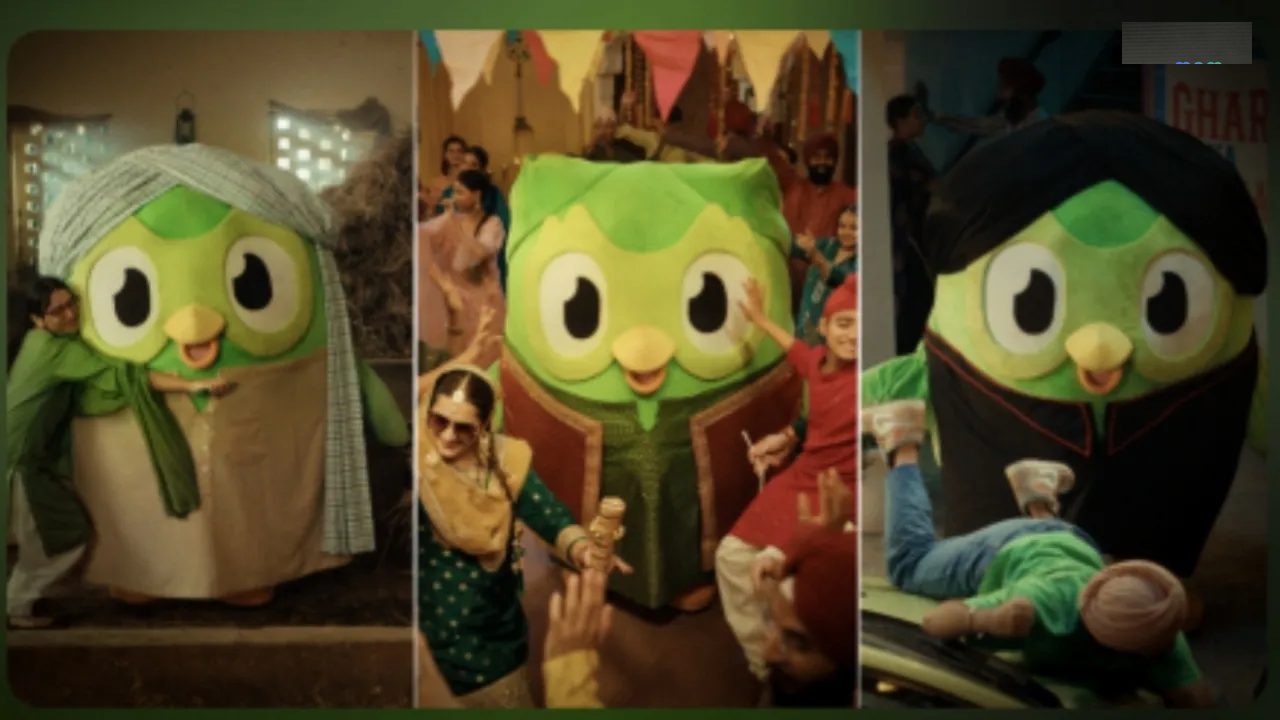
The films drop Duo into recognisably Punjabi worlds — arguments, celebrations, everyday chaos — where English arrives in unexpected ways and the owl turns more lovable than unhinged as he builds a community of Ullu Da Patthas. “Being called an Ullu Da Pattha’ is a rite of passage if you grew up in a Punjabi household,” note Talented creatives Ankush Sabharwal and Leena Gupta — aiming for an affable Duo who wins people over rather than just his snarky global persona. Director Anant Sharma leans into “whacky, silly humour” in typically Punjabi contexts.
Marketing take
Regional course launches win when they don’t just localise the UI — they borrow the region’s favourite insult, flip the meaning, and let culture do the hard sell.