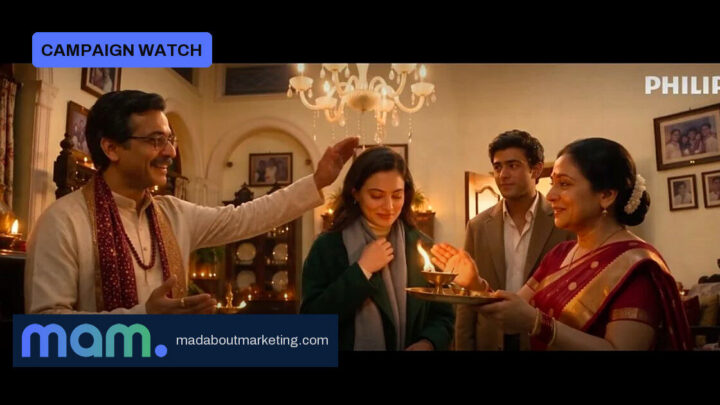
How India’s Diwali Ads Trade Spectacle for Connection
From Lego's unscripted kids to Cadbury's feuding neighbours, Diwali 2026 ad films are trading spectacle for smaller, sharper human moments.

Diwali lands on November 8 this year, and the festival advertising window is crowded again. What stands out across a new Campaign India roundup of work from India and Southeast Asia is not louder sets or grander celebrity appearances, but a shared bet on small, emotionally specific moments: a phone call home, a neighbour’s quiet favour, a child’s unscripted answer.
For brand leaders, this is a useful signal. The work still draws on familiar festive themes—family, homecoming and neighbourliness—but the executions have shifted away from polished perfection and toward connection that feels observed rather than staged.
01 · The campaigns, briefly
- Lego asks children how they would make Diwali more playful in a 1:23-minute film from Storm Productions, keeping much of their response unscripted.
- Cadbury, with Ogilvy India, uses two bickering neighbours to launch its Milky Mithai range; one man quietly decorates the other’s home after an injury.
- Vivo India‘s ‘#JoyOfHomecoming’, by Dentsu Creative Webchutney, starts with a long-distance call between a mother and her son and ends with that connection becoming a reason to fly home.
- Amazon India‘s ‘#DeliverTheLove’ frames delivery as a bridge that keeps rituals and small gestures alive across distances.
- The Body Shop turns 20 in India and anchors its Diwali push around jasmine, moving a familiar festive flower into self-care and gifting.
Across Southeast Asia, Malaysian brands are playing the same note. Air Selangor’s ‘Sinar Rani’ follows a widow finding new light after loss; CelcomDigi finds connection inside a chaotic family photo; and Watsons Malaysia turns festive preparation mishaps into family unity.
02 · Why the shift matters
Festive advertising is now judged on recognition, not reach alone. Consumers can spot a generic diya-and-rangoli film instantly. The stronger work this year uses a specific ritual or object—a mithai range, a jasmine range, a call home—and lets a small human choice carry the plot.
Sukesh Nayak, chief creative officer at Ogilvy India, puts it simply: “There’s enough bitterness in the world but a little sweetness has the power to go a long way.”
That line doubles as strategy. The sweetness is not only the product; it is the offer of resolution in a small, everyday conflict.
03 · What to do with it
Marketers planning for the next festive window can steal the pattern rather than the execution. Anchor the story in a single ritual or object. Let the moment feel imperfect—an awkward family photo, a messy preparation, an improvised child. Then place the brand as the small enabler, not the hero.
The take for this Diwali: the brands earning attention are not decorating louder; they are making themselves the reason a small, human moment ends well.
Source: Campaign India