Inside Barbie’s $1.5B adult toy opportunity
Mattel pairs a $60 Celine Dion collector doll with a Smriti Mandhana role-model doll as Barbie chases the $1.5B adult toy market and cultural IP status.
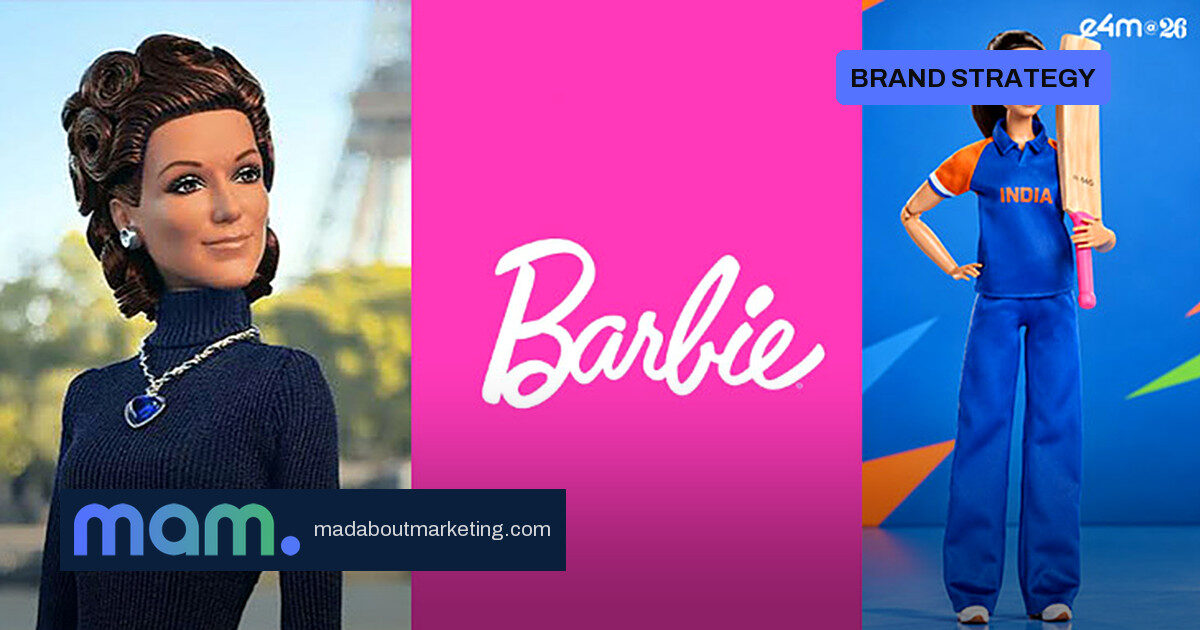
On 14 October 2026, Mattel released a $60 limited-edition Barbie modelled on Celine Dion’s 1998 Academy Awards look. Seven months earlier, Indian cricketer Smriti Mandhana became the first Indian athlete to receive a one-of-a-kind Barbie likeness. The two moments look like separate PR exercises. Read together, they mark a deliberate campaign to turn a 60-year-old toy into a high-margin, multi-generational cultural IP.
01 · Where the money is moving
The commercial pull is the “kidult” segment, consumers aged 18 and older. Circana data puts adult-driven US toy sales at $1.5 billion in the first quarter of 2024 alone, with that group accounting for more than 17% of total toy industry sales. For a legacy toy maker facing flat or declining traditional toy sales, those buyers change the economics.
Mattel is serving this demand through its direct-to-consumer platform, Mattel Creations. The Celine Dion doll is deliberately placed in the Barbie Signature collector line, recreating her pale blue Michael Kors gown and the “Heart of the Ocean” necklace from Titanic. Scarcity and pop-culture nostalgia let Mattel command premium pricing instead of relying on volume retail.
02 · Two engines, one brand
The strategy runs on two tracks. The first is commercial: convert nostalgia into collectible, higher-margin sales. Dion joins a curated portfolio of music icons including Whitney Houston, Stevie Nicks, Tina Turner and Elton John.
The second is about meaning. Mattel’s Role Models programme uses one-of-a-kind dolls to modernise Barbie’s equity. The Smriti Mandhana doll, launched in March 2026, pushes into India and aligns the brand with female achievement in a sport long dominated by men. It works less as a retail product and more as corporate communication, mirroring the global rollout of custom dolls for nine athletes around the 2024 Paris Olympics, including Venus Williams, Mary Fowler and Estelle Mossely.
03 · Cultural participation over paid media
The most instructive shift for marketers is how these dolls are sold. Mattel is not leaning on traditional paid media inventory to move collector items. The celebrity’s existing fan base does much of the amplification. The doll becomes a physical marker of a cultural moment, and entertainment and sports media pick it up organically.
- Premium nostalgia drives margin through scarce collector drops.
- Role-model partnerships build modern relevance and earned media.
- Local icons, like Mandhana, open growth markets without a new product architecture.
04 · What brand leaders can use
Heritage brands often answer stagnation with more products. Barbie’s play is different: keep the product code, change the cultural role. Scarcity turns a plastic doll into a collector asset; a well-chosen role model turns the same brand into a symbol of achievement.
The takeaway for India’s brand leaders is not to make dolls. It is to ask which parts of your brand can be collected and which parts can be believed. Margin may come from the first; long-term relevance comes from the second.
Source: Indian Advertising Media & Marketing News – exchange4media