India’s OOH market may be bigger than top-six reports say
Industry leaders say India's OOH market may be bigger than reported as local signage, dealer campaigns and wall paintings stay unmeasured.
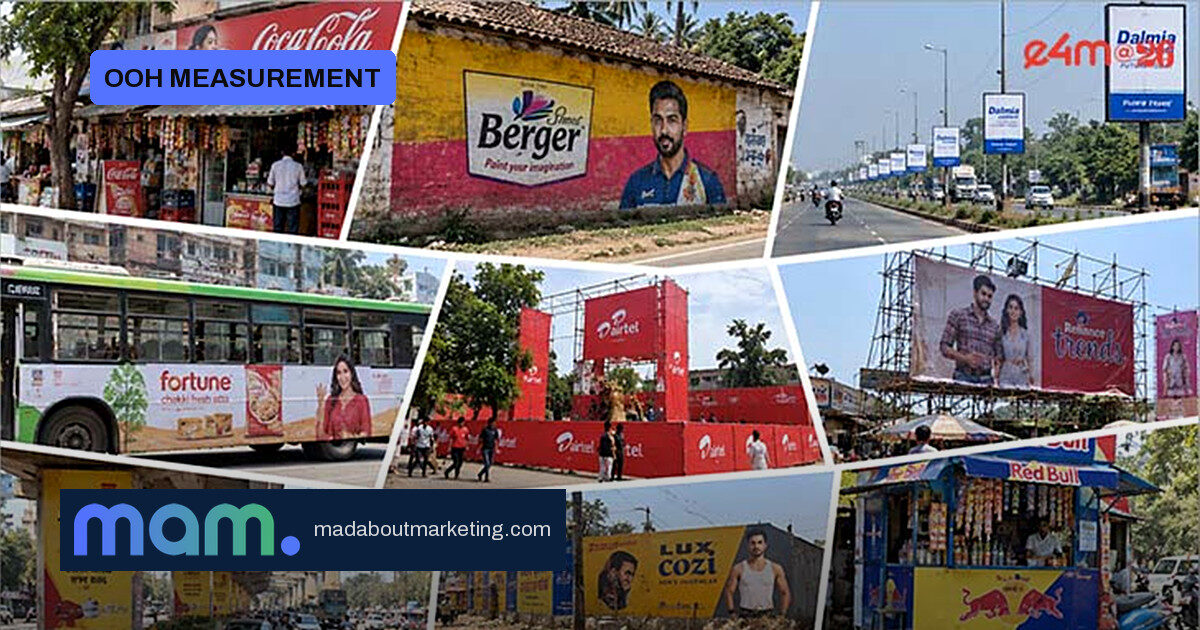
India’s outdoor advertising market may be leaving a large slice of its business outside the industry’s field of view. Premium hoardings, airports, metro networks and digital screens dominate the organised OOH conversation. But a parallel ecosystem of local advertising runs across smaller towns, retail catchments, roadside locations and regional commercial centres – and industry leaders say much of it is not showing up in national estimates.
01 · What is slipping through the reporting net
From local retail signage and dealer campaigns to rural wall paintings and short-term festive placements, advertising is being bought and recorded in different ways. That inconsistency makes it hard to say whether all outdoor expenditure is represented in market estimates.
“It is quite possible that the actual size of India’s OOH market is larger than what some industry estimates indicate,” said Rohit Chopra, Deputy CEO of Times Innovative Media Ltd (Times OOH). “However, putting a number to that gap is difficult without a comprehensive assessment of both organised and unorganised media activity.”
Jayesh Yagnik, CEO of MOMS Outdoor Media Solutions, said some spending likely falls outside the reporting net, but he would not put a percentage to it without validation.
02 · The classification question
Before activity is counted as missing, brands need to check whether it has been excluded altogether or recorded under another heading. The executives point to activation budgets as one possible hiding place.
“I believe some spending does fall outside the reporting net, but I wouldn’t put a percentage to it without proper validation,” Yagnik said. “Local retail campaigns, dealer-led advertising, rural wall paintings and short-term festive activity are areas worth examining.”
A regional campaign may involve many placements – roadside displays, local-market signage, retail areas and temporary branding – rather than one consolidated media buy. Each placement may be planned separately, and the overall campaign spend may never be captured in one place.
03 · The top-six concentration
Reported OOH spending is concentrated in India’s top six metropolitan cities. But a higher share of reported revenue does not prove a similar share of advertising activity, the leaders caution.
“The largest cities have established advertising ecosystems, premium commercial locations, and a strong presence of national brands, so their prominence in spending estimates is understandable,” said Fahim Batliwala, Chairman, Managing Director and Promoter of SIMCA Advertising Limited. “However, reported market share alone does not tell us whether advertising activity elsewhere is being measured with the same degree of completeness.”
Smaller markets have their own local advertisers – jewellers, developers, coaching institutes and automobile dealers – who often buy directly from local owners. That spend can be less visible in national estimates.
04 · Why fragmented ownership matters
The OOH ecosystem is spread across operators with different ownership structures, operating practices and measurement approaches. Local static sites, wall paintings, smaller transit formats and scattered screen networks add complexity to consolidation.
“One of the challenges in assessing India’s OOH market is that advertising activity takes place across a wide range of formats, operators, and markets, not all of which may be represented consistently in industry estimates,” Batliwala said.
05 · What marketers can do now
For CMOs and media owners, the practical takeaway is to treat metro-focused OOH figures as incomplete rather than absolute. Here are three checks worth applying:
- Ask agencies to break out regional OOH spend separately from metro or national lines.
- Review whether local dealer, retail and festive placements are sitting in activation budgets instead of OOH.
- Push media partners for common definitions and consistent reporting across formats and markets.
The industry’s fix will take time: better market documentation, wider participation from regional media owners, and confidential, standardised reporting. Until unrecorded spending is separated from differently classified activity, the true size of the blind spot will remain an open question. But brands that start asking now will plan with a clearer map than those waiting for a perfect number.
Source: Indian Advertising Media & Marketing News – exchange4media