Haldiram’s Diwali Push Goes Creator-First and Q-Commerce
Haldiram’s layers a dozen celebrities, digital creators and an AI talent over Blinkit–Zepto integrations to turn Diwali intent into quick-commerce sales.
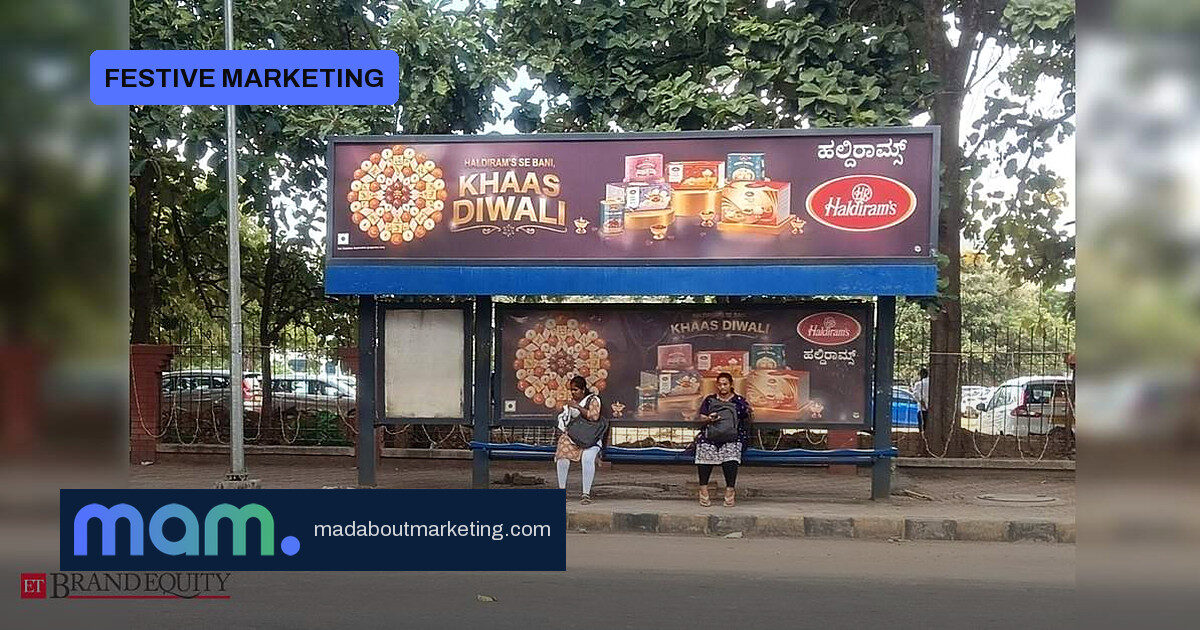
Haldiram’s is treating the Diwali window as a conversion moment, not just a visibility one. Its new campaign, Haldiram’s Se Bani Khaas Diwali, is built digital-first, with print and outdoor playing support across key Indian markets.
The celebrity line-up is deliberately broad. Shruti Haasan, Rana Daggubati, Sreeleela, Neha Dhupia, Angad Bedi, Rohit Saraf, Malavika Mohanan, Shriya Pilgaonkar, Ankita Lokhande, Farah Khan, Sanjeev Kapoor and Aparshakti Khurana bring reach across film, television, regional cinema, comedy and food. For sharper relevance, the brand has added digital creators Purav Jha, Aaditya Kulshreshth (Kullu) and Rida Tharana, along with AI-generated creator Sardar Jappu Singh.
01 · Where the campaign actually converts
The more instructive layer is distribution. Haldiram’s has built a dedicated “Haldiram’s House of Sweets” storefront on Blinkit and planned promotional sampling on Zepto. Creator-led content runs on Instagram and YouTube, but the purchase moment sits inside quick-commerce apps where festive buying is already under way.
- A dozen celebrities for broad festival salience
- Three digital creators and an AI creator for Gen Z and regional resonance
- A Blinkit storefront and Zepto sampling to capture near-instant demand
Divya Batra, vice president – marketing at Haldiram’s, frames the shift: “Our approach has been digital-first, but more importantly, audience-first.”
02 · Why the mix matters for brand leaders
Festive advertising has long been scored on reach and recall. This plan points toward a fuller funnel: mass faces for salience, creators for affinity, and quick-commerce for immediacy. Quick-commerce platforms are becoming branded shelf space for the festival window. A storefront or sampling moment puts the brand in the basket at the exact moment a household is finishing festive shopping.
That is the practical meaning of “audience-first.” A digital-first ad that is simply a shortened TV spot would miss how younger and regional buyers discover food gifting. The creator layer meets that discovery behaviour, while the quick-commerce layer removes the gap between inspiration and purchase. For CMOs, this is a three-layer media model: broadcast-led salience, creator-led relevance and q-commerce-led conversion, briefed separately but planned as one journey.
The inclusion of an AI-generated creator also signals a controlled experiment with synthetic talent in a trust-heavy category. The human creators carry credibility; the AI character adds novelty without carrying the full weight of the brand promise.
03 · What to do with it
First, pair broad celebrity reach with niche creators instead of choosing one over the other. Second, treat quick-commerce as a conversion layer rather than an afterthought: a dedicated storefront or sampling programme turns festival intent into immediate sale. Third, consider AI-created talent only where it adds cultural novelty rather than replacing human creators.
The wider lesson is that a festive campaign can now be judged by baskets, not just impressions.
Source: ETBrandEquity.com