FMCG festive ad spends rise 10-15% despite margin pressure
FMCG brands are lifting festive ad budgets 10-15% despite margin and demand pressure, shifting money to digital, regional targeting and measurable returns.
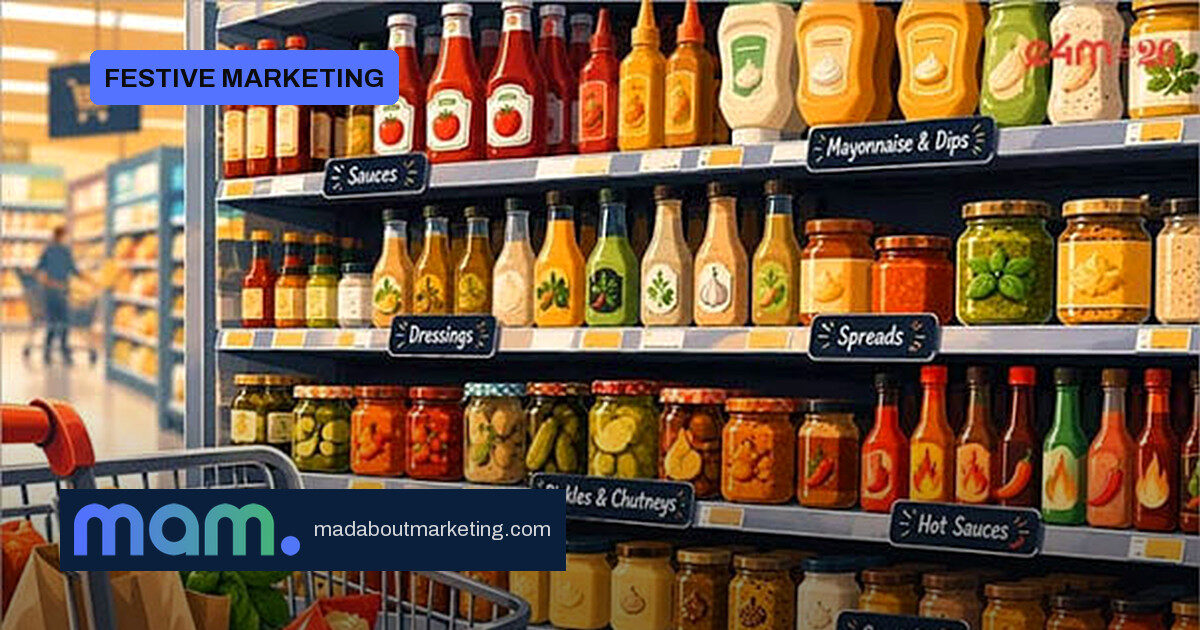
FMCG brands are not pulling back from the festive calendar—but they are being far more deliberate about where the money lands. Industry executives expect average festive ad spend to rise 10-15% over last season, even as margin pressure and uneven consumption make every rupee harder to justify.
01 · The spending split is widening
Listed FMCG companies are taking visibly different bets. Nestlé India lifted advertising and marketing spend by 46% year-on-year in the September quarter. Marico raised spend by 44%, and Colgate-Palmolive increased advertising expenditure by 40%. Dabur and Godrej Consumer Products reported smaller rises of 7.1% and 2.2% respectively, while Hindustan Unilever reduced its ad spend.
- Nestlé India: +46%
- Marico: +44%
- Colgate-Palmolive: +40%
- Dabur: +7.1%
- Godrej Consumer Products: +2.2%
- Hindustan Unilever: reduced
Anil Solanki, Media Lead at dentsuX, expects festive ad investments to rise 10-15%, with some leading brands going as high as 20%. The difference, he says, is that brands are moving away from blanket visibility toward sharper media allocation, regional targeting and conversion-led campaigns.
02 · The media mix is being rebuilt around sales
The festive brief is no longer just awareness. Rajeev Jain, Senior Vice President of Corporate Marketing at DS Group, said e-commerce and quick commerce now take a significant share of sales, and budgets are shifting heavily toward them. But he pushed back on an either/or view. “It’s not TV versus digital, it’s TV and digital together,” Jain said. Linear TV still delivers mass reach; CTV, digital video, influencers and paid social are absorbing the next layer of investment.
For D2C food brands such as Two Brothers India Farms, the festive strategy has moved from building visibility to driving engagement and conversions. Co-founder Satyajit Hange said the communication stays rooted in food quality, provenance and tradition while prioritising measurable outcomes—without compromising long-term brand building.
03 · Rural demand is telling a different story
The selective approach reflects a divided consumption environment. According to Worldpanel, formerly Kantar, urban FMCG expenditure declined 4% in the first quarter of FY27, against 14% growth in the same period a year earlier. Rural spending rose 15%, reaching ₹53,760 per quarter. Affluent urban households spent an average of ₹81,759 per quarter and still tightened by 4%; less affluent urban households spent ₹49,832 on average and cut by the same margin.
That divergence is pushing brands away from a uniform national playbook. Value packs, promotional offers and premiumisation are being used together to address different income groups, and regional targeting is gaining weight.
04 · Festive success is paid for in the off-season
Mohit Ghate, CEO of Wit & Chai, cautioned that the festive quarter is not a substitute for sustained investment. Some brands move more than 50% of their inventory in the three festive months, but the festive marketing push yields results only when brands have spent meaningfully through the non-festive period. In the clutter, consumers return to brands they already trust.
Shradha Agarwal, Co-founder and CEO of Grapes, described the shift as moving from maximising reach to maximising profitable growth. Marketers are becoming more selective about the categories, markets and consumer groups where advertising can actually influence purchase. Nisha Singhania of Infectious Advertising framed the revised brief as “getting more out of every rupee.”
05 · Trust is now part of the brief
Compliance has also moved from legal to marketing. FSSAI has issued more than 150 notices to food and beverage manufacturers, e-commerce platforms and food-service businesses over alleged misleading claims and other violations. Agarwal said brands need claims that are accurate, substantiated and consistent across packaging, advertising, influencers and commerce platforms. For Gen Z audiences, that extends to authenticity and lived product experience; micro and nano influencers are becoming a credible bridge in smaller towns.
06 · The marketing take
Festive budgets are no longer judged by reach alone: spend where the sale closes, and build the trust that converts later.
Source: Indian Advertising Media & Marketing News – exchange4media