
V-Guard Cool Wires promise 2X fire resistance by tackling heat
V-Guard's new Cool Wires campaign moves the category from fire and smoke to heat, backed by its ICE 300 platform across Kerala, Karnataka and Orissa.
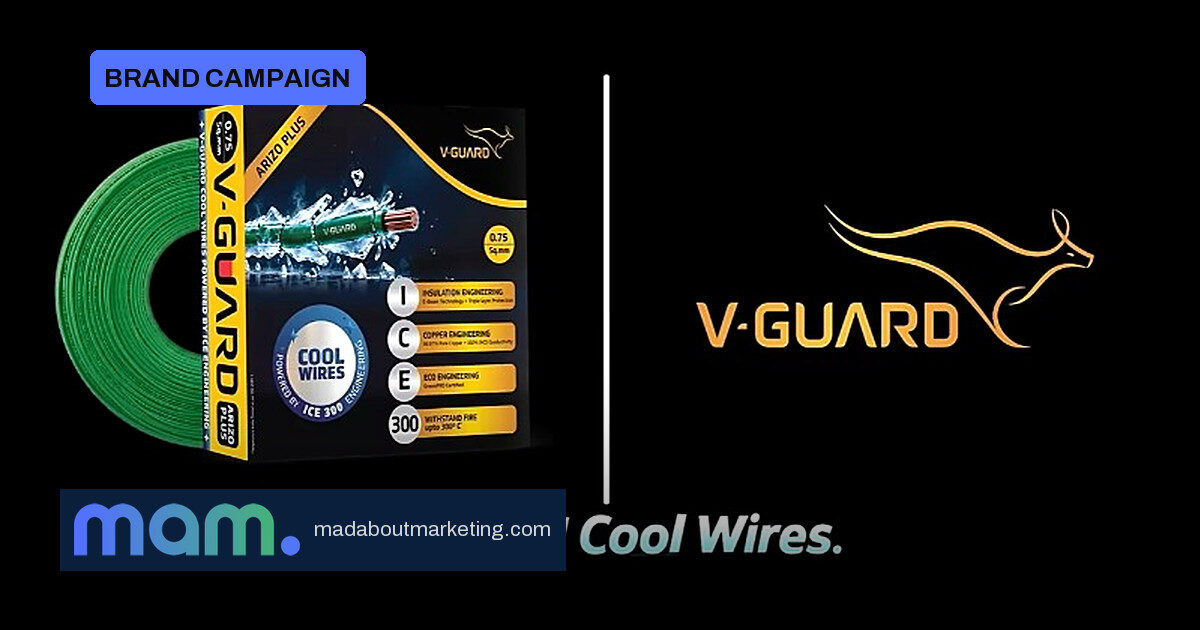
V-Guard Industries is walking away from the usual wire-category scare. Its new integrated campaign for Cool Wires does not open with melting insulation or a bedroom on fire. It opens with heat, the cause most advertising stops short of naming.
01 · From consequence to cause
Most wire brands have trained buyers to think about what could go wrong: fire, smoke, sparks. V-Guard’s new film, written and directed by Anil Ralph Thomas of Ralph&Das, flips that approach. Wires expand under heat, the work suggests, and so do people when they lose their cool. That parallel becomes the creative device.
The film is part of a 360-degree plan across television, connected TV, OTT, digital video, social media and out-of-home, with vernacular outreach in Kerala, Karnataka and Orissa.
02 · Engineering that puts heat first
The product claim is built on V-Guard’s proprietary ICE 300 Engineering platform. Cool Wires, the company says, can withstand fire up to 300°C and offer 2X fire resistance compared with ordinary PVC wires. The insight behind the shift is practical: as homes stack more high-power appliances, electrical load rises, wires heat up, and overheating becomes the real risk.
- Narrative shift: from fire and melting to heat and its root cause.
- Memory hook: a positive word, “cool”, replaces another safety warning.
- Reach plan: TV, CTV, OTT, digital, social, OOH and vernacular media work together.
“The wires category has traditionally spoken the language of consequences – fire, melting and smoke – focusing on what can go wrong,” said Nandagopal Nair, VP of Brand and Communication at V-Guard. “We saw an opportunity to take a step back and address the underlying cause itself: heat.”
03 · What the shift means for marketers
For a brand manager, the useful frame is the distinction between symptom and cause. Fire and melting are symptoms; heat is the cause. V-Guard’s work argues that a brand wins when it resolves the cause, not when it dramatises the symptom. That makes the campaign less about buying a product and more about buying a better engineering decision.
It also gives the brand a more positive emotion. Fear gets attention quickly, but it is difficult to attach to long-term preference. “Cool” is a more pleasant, repeatable idea that can work across product packaging, dealer boards and social content without the same wear-out.
Kaustav Das, Director and CEO of Ralph&Das, puts the creative challenge plainly: the hardest part of a new conversation is being noticed. The campaign’s literal heat metaphor is designed to earn that attention while establishing the Cool Wires name.
Marketing take: When a category is stuck selling the symptom, own the cause.