Piyush Pandey’s Playbook for Advertising’s AI Age
A year after his passing, Piyush Pandey's creative creed still lands: observe people, serve the brand, use AI as a tool—not a thinker.
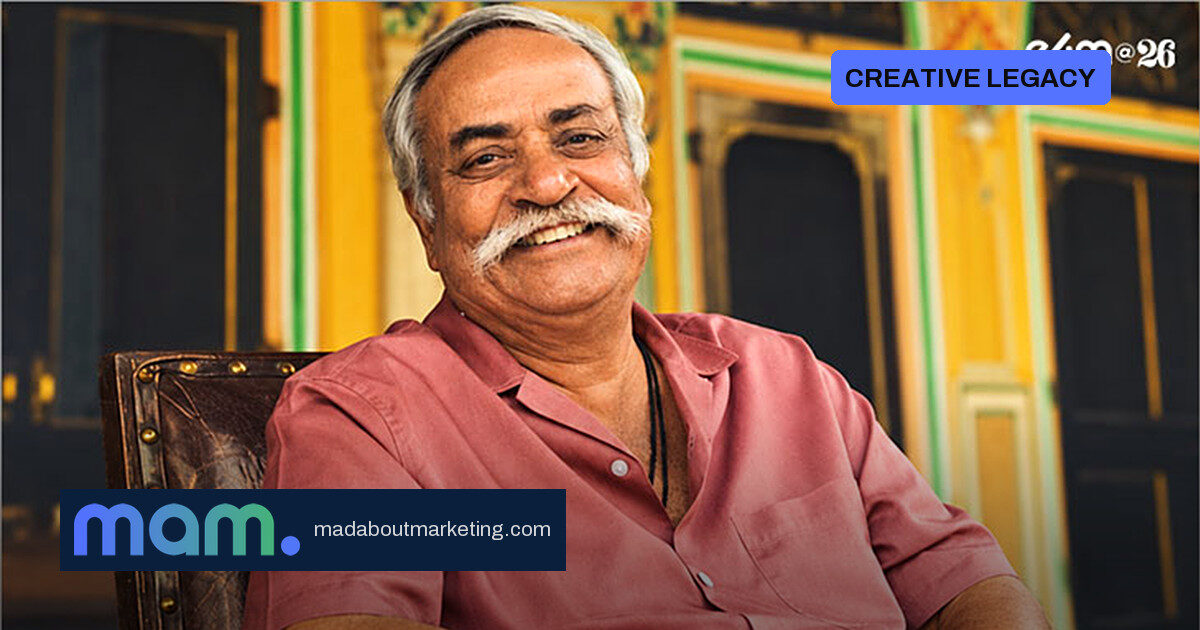
A year after Piyush Pandey’s passing, Indian advertising is louder with AI, performance dashboards and short-form video. Yet the question worth asking is not what the tools can do, but what they should not replace. In a guest column on Exchange4media, independent communication consultant Ganapathy Viswanathan revisits the Ogilvy veteran’s creative philosophy—and it still cuts through platform noise.
01 · Consistency, not one big campaign
Pandey’s path ran from client servicing to creative leadership. His legacy was not one blockbuster but steady, relatable work that built brands over time. That discipline is rare now, when a campaign can trend in the morning and vanish by evening.
02 · Awards are a by-product, not the brief
He valued recognition because it energises teams and raises standards. But the first job was to solve a genuine brand problem for the client and the consumer. A trophy was a bonus. Today, when attention and likes can quietly become the real objective, that hierarchy still matters.
03 · Data shows actions; observation shows feelings
Pandey’s creative strength was noticing simple human truths: what makes people laugh, what irritates them, what they fear. Modern advertisers know what people search, watch and click. But data describes behaviour; it does not always capture emotion. The missing layer is empathy—talking to people and watching them, not just reading their dashboards.
04 · AI is a tool, not a thinker
The column argues Pandey would have embraced AI with curiosity, using it to generate options, analyse information and speed execution. He would not have let it replace human thinking. Machines can act with the help of human thought; the creative challenge is deciding which generated idea carries a real human truth.
For India’s CMOs, this is not nostalgia. It is a reminder that martech adoption and performance budgets still need a creative spine. A brand that only optimises to what people click risks losing what makes people care.
05 · Brevity is not the enemy
Short-form video gives brands seconds to make an impression, but Pandey would not have treated that as an excuse for smaller thinking. A six-second idea can be powerful if the thought is strong. The test is not the length of the ad; it is whether the idea is worth remembering.
A working checklist for brand teams
- Start from a brand truth, not a trend.
- Use data to understand action; use observation to understand feeling.
- Let AI generate options, but have a human judge the idea.
- Chase great ideas before awards or fleeting attention.
For CMOs, the reminder is practical. Audit whether your process begins with a consumer insight or a platform feature. Hold work to one test: does it build the brand and connect one human being with another? The tools have changed dramatically. The fundamental brief has not.
Source: Indian Advertising Media & Marketing News – exchange4media