~ Reckitt’s flagship Banega Swasth India programme lands in Leh with Jagran Pehel, Sesame Workshop tools, and a five-pillar hygiene curriculum ~
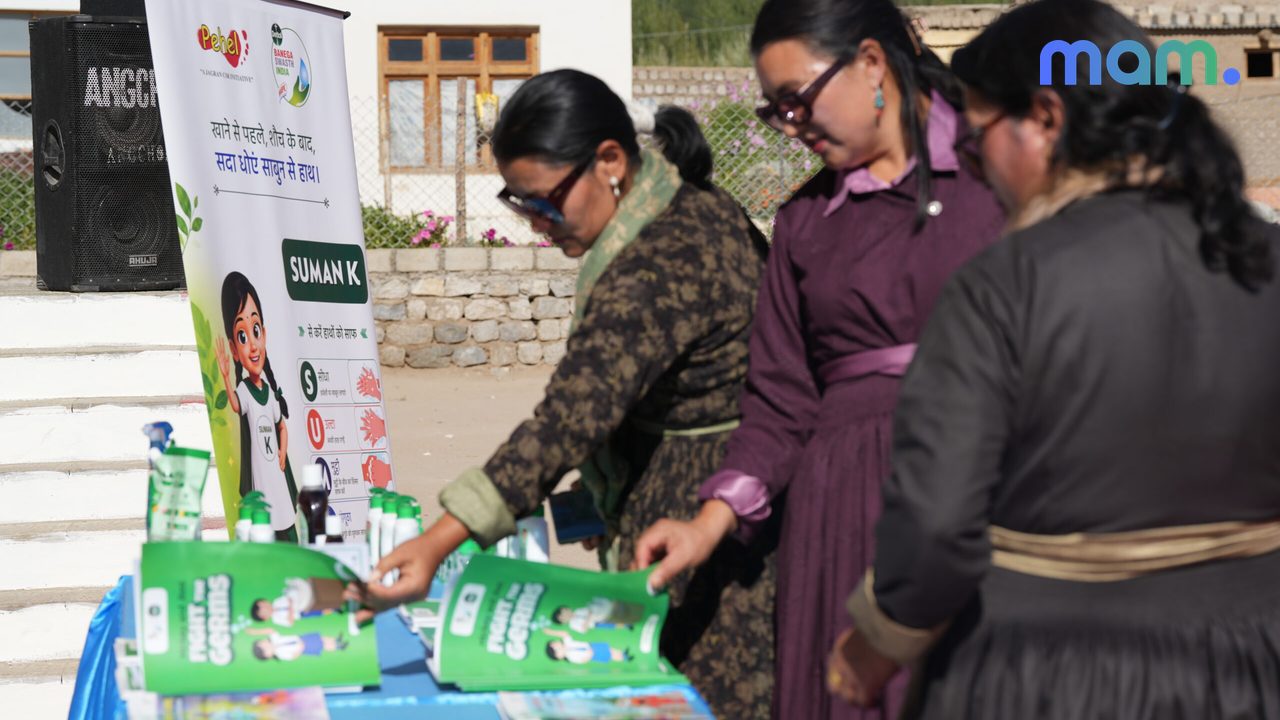
Leh, September 2026: Reckitt has taken its flagship Dettol Banega Swasth India (BSI) campaign into one of India’s most remote high-altitude markets, launching the Dettol School Hygiene Education Programme in Ladakh with the Directorate of School Education, Ladakh. The formal kick-off was at Council Model School, Ayu Saboo, Leh, with Bhanu Prabha, IAS, Administrative Secretary, School Education Department, UT Ladakh, in attendance.
The brief is last-mile behaviour change, not a one-off CSR photo-op. The programme builds knowledge around five hygiene pillars — personal, school, home, during illness, and neighbourhood — and leans on age-appropriate classroom work plus tools kids will actually use: workbooks, teacher manuals, Sesame Workshop videos, digital hygiene games, an interactive chatbot, comic books, posters, and 3D DIY sanitation kits. Live handwashing demos are built into the school roll-out.
On-ground delivery sits with Jagran Pehel. Prof. Ravi Bhatnagar, Director, Corporate Communications and Corporate Affairs, South Asia, MENARP and Africa, Reckitt, framed the Ladakh push as geography shouldn’t block healthier habits: the expansion is meant to leave no one behind on hygiene education. Bhanu Prabha called schools a “multiplier force” — kids carry habits home, then into the community.
The numbers behind the brand story remain the BSI decade-long claim: 30+ million children reached across 900,000+ schools and 43 billion+ handwashing occasions. Ladakh is the latest proof-point that Dettol’s public-health platform still has white space at altitude.
Marketing take: Festive ads fight for eyeballs; Banega Swasth India fights for the hard geography. Taking hygiene curriculum into Leh schools is Reckitt buying relevance where conventional media barely reaches — and turning kids into brand ambassadors for soap, not slogans.