59% of advertisers see retail media as full-funnel
Amazon Ads, MMA India and WPP Media find 82% of Indian advertisers are not fully executing full-funnel marketing, even as 59% see retail media as full-funnel.
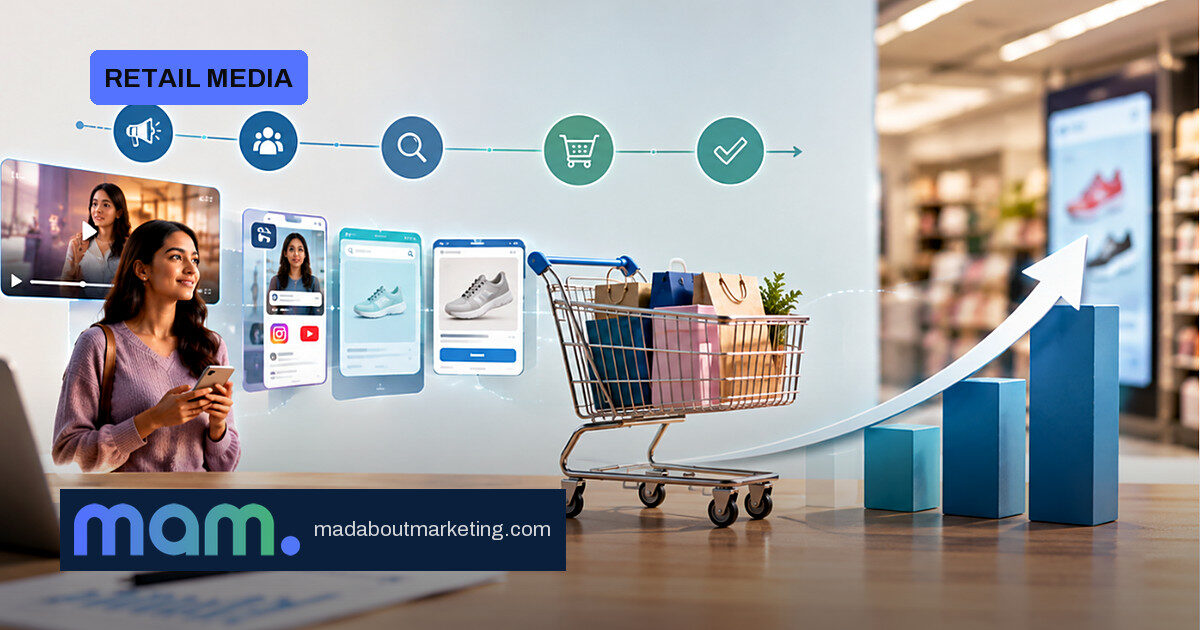
Spending more on digital advertising does not automatically buy full-funnel maturity. That is the sharpest finding in a new playbook from Amazon Ads, MMA India and WPP Media, based on a survey of 126 advertising decision-makers in July and August 2026. While 59% of advertisers now view retail media as a full-funnel channel, 82% are not yet fully executing full-funnel marketing.
01 · Bigger budgets, same silos
The report, From Fragmentation to One View: A Marketer’s Playbook for Full-Funnel Growth, challenges a familiar assumption. Among advertisers spending more than ₹200 crore a year on digital, 14% described their full-funnel execution as unsuccessful or not attempted. Among those spending ₹50-100 crore, the figure was just 4%. Maturity, the authors argue, is an integration problem, not a budget problem.
Sairam Ranganathan, head of commerce at WPP Media India, puts the issue simply: ‘Marketers have treated brand and performance as separate conversations.’ When those remain separate, even generous media budgets underperform.
02 · Measurement is the missing link
The playbook points to measurement as the central blocker. 67% of respondents cite the absence of unified measurement as a barrier, and 69% say unified cross-channel attribution is the capability they most want.
That gap is widening as journeys fragment. WPP Media’s Touchpoint India study found that the touchpoints contributing to 80% of purchase influence in non-food consumer packaged goods grew from 12 in 2018 to 21 in 2024. The influence of the top 15 touchpoints dropped from 85% to 68% in the same period. Last-click reporting, the playbook warns, misses the demand created earlier.
03 · Retail media moves up the funnel
The headline shift is retail media’s changing role. 59% of surveyed advertisers see it as a full-funnel solution: 47% see it becoming more useful for awareness and consideration, and 12% already use it across awareness, consideration and conversion. Another 25% still treat it mainly as a lower-funnel sales channel.
WPP Media’s econometric modelling across consumer packaged goods found e-commerce was the single largest contributor to both volume sales and brand KPIs. For brands with strong commerce links, the estimated impact was 10-12% on brand awareness, 18-20% on consideration and 20-25% on offline sales.
04 · From screen to cart
Ranganathan calls this a ‘connected commerce ecosystem’. Quick commerce and marketplace integrations, such as JioHotstar’s add-to-cart links and shoppable Amazon Prime Video ads, compress the journey from exposure to purchase. QR codes in connected TV ads now point straight to quick-commerce platforms and marketplaces.
Even so, investment plans lag intent. Only 55% of advertisers plan to raise retail media spending in 2027, against 80% for video and social or creator marketing. Retail media itself is growing 25-30%, well above the 8-10% growth in overall advertising. FMCG, mobile handsets, electronics and white goods are among the categories seeing stronger growth.
05 · What marketers can do now
For brand leaders, the playbook’s practical path is clear:
- Connect the journey: brief brand and performance teams against shared consumer pathways, not separate objectives.
- Build one measurement view: push for cross-channel attribution instead of last-click-only reporting.
- Use retail media early: deploy commerce signals for awareness and consideration, not just conversion.
- Match metrics to stage: evaluate awareness, consideration, conversion and loyalty indicators together.
Smaller advertisers can test connected campaigns in one focused segment before scaling. Larger advertisers may get more value from uniting fragmented teams and measurement systems than from adding budget. The marketing take: full-funnel growth rewards integration, not incrementality.
Source: Afaqs!