Licious Wants to Be the Amul of Meat — Content Moves From Support Act to Culture Play
Licious SVP-Marketing Varun Khanna on pushing content to 15–20% of spend, lifting consideration from 41% to 57%, and chasing the “Licious order karte hain?” cultural cue
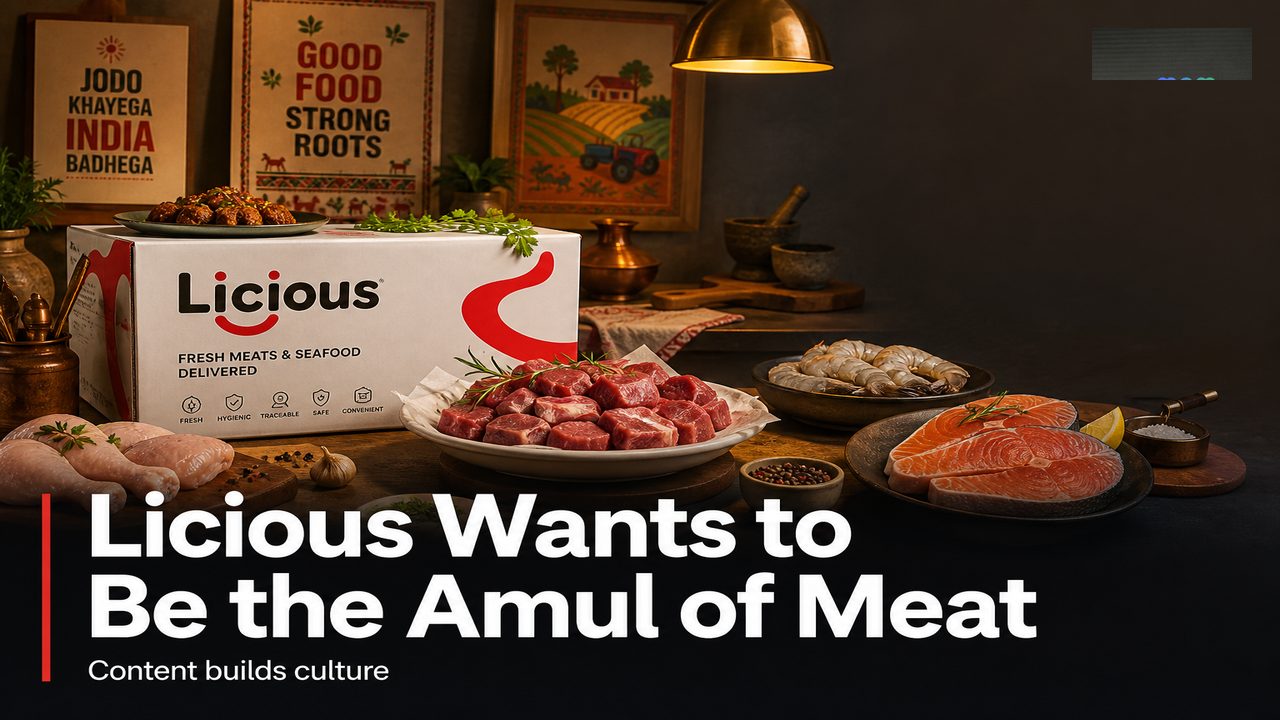
Bengaluru, September 2026: Meat-and-seafood D2C brand Licious is reframing marketing around culture, not just conversion — with SVP-Marketing Varun Khanna spelling out an Amul-scale ambition for India’s nearly $60 billion (about Rs 5.67 lakh crore) category.
Content that once trailed big ads is now often the brief’s starting point. On the momo launch, 80–90% of marketing investment went into content and creators; overall, social and content have climbed from near-zero to roughly 15–20% of marketing spend in 18 months, while consideration has moved from 41% to 57%.
“If, 18 months from now, people say, ‘Licious order karte hain?’ instead of saying ‘chicken order karte hain’, then we’ll know we’ve succeeded in becoming part of the culture,” Khanna says — casting creators as trust storytellers (farm visits, regional couple films such as Chennai’s Tharam Adhu Nirantharam) rather than mere amplifiers.
The playbook stays city-specific across 18 markets: snacking and lifestyle in migrant metros, protein convenience via a daily chicken-breast range (~30g protein / 200g), and the broader Our Good Protein (OGP) push with partners like HYROX. Advertising still sits at about 6–8% of business — with ~93% of the category still unorganised, Khanna calls this “chapter one.”
Marketing take
When a category still feels informal, the brand that owns the cultural shorthand — packaging, creators, city nuance — can outlast the brand that only buys reach.