Two Grammarly Superhuman Go films put stories before demos
Filmmaker Kartikye Gupta brings a story-first approach to two Grammarly Superhuman Go ads, using student dilemmas instead of product demos.
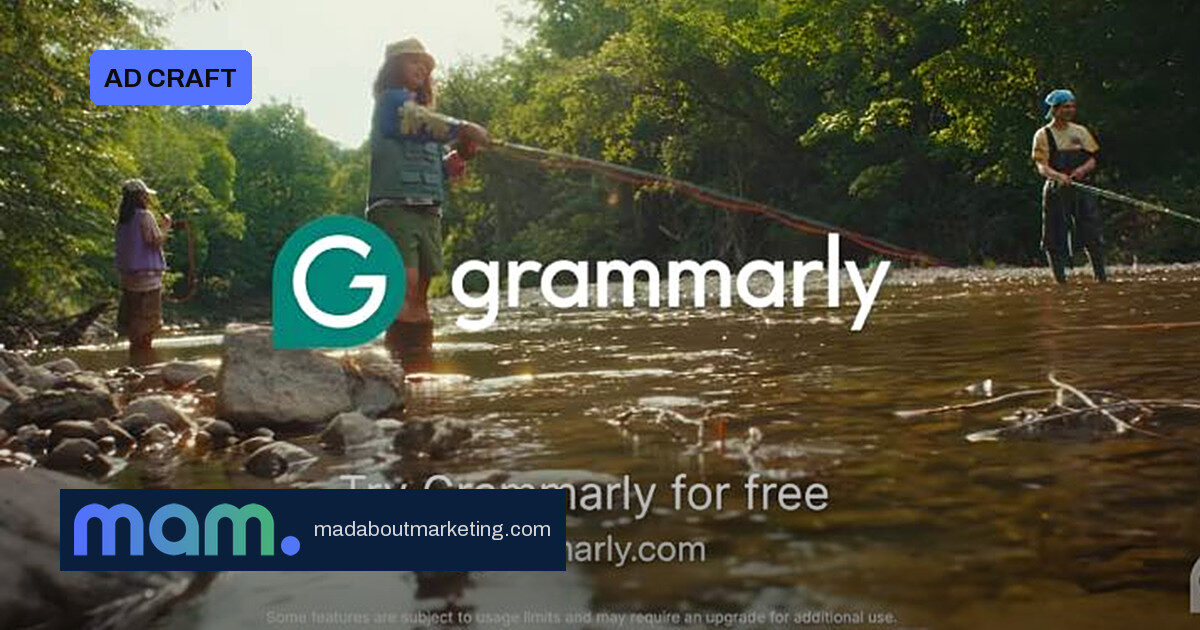
Grammarly’s Superhuman Go is getting a story-first treatment in two new ad films directed by Los Angeles-based filmmaker and editor Kartikye Gupta. Instead of leading with an interface tour, each film drops the AI assistant into the middle of a student’s very ordinary dilemma.
01 · Two deadlines, two worlds
The films — Your Paper + Grammarly = Good Chemistry and From Group Project to Gone Fishing — use student life as the premise. In the first, a chemistry student has a final paper due on the same day as his best friend’s birthday, and he has also promised to bake one of his signature cakes. In the second, an economics student’s group project, a big contributor to her grade, lands on the same day as a long-awaited fishing trip.
The product enters as a learning partner, not as a lecturer. Superhuman Go helps the chemistry student start his paper and refine the writing, and helps the economics student resume work on the project and polish the final submission. The subject matter supplies the films’ texture: chemistry and baking references in one, economics and fishing language — value, investment, yield, upside and reeling in ideas — in the other.
The director is no stranger to character-led work. Gupta’s credits include Dr. Elevator and Please Don’t Call the Cops, and that editorial instinct shows in how the films hold on small, relatable tensions — an overdue paper, a friendship moment, a trip you don’t want to miss — rather than rushing to a product screen.
02 · Why the story-first brief matters
Gupta, co-founder of ScrollX.io, said Grammarly wanted these films to feel like stories about real student situations rather than traditional product demonstrations. He summarised the balancing act as keeping the films entertaining while ensuring the product’s role stayed clear without interrupting the story.
“The strongest branded stories are the ones where the message grows out of the character and the situation.”
That line is the strategic core. For brand leaders, it is a reminder that an AI writing assistant is a utility product; the ad’s job is to attach it to an emotional or social moment, not to explain every capability.
03 · What Indian brand teams can borrow
India’s marketing landscape is comfortable with slice-of-life storytelling, but product demos still sneak into tech and AI advertising. This work offers a cleaner template.
- Start with the character’s conflict — a deadline, a commitment, a trip — before the product appears.
- Let the product remove one specific obstacle rather than doing everything for the protagonist.
- Use the protagonist’s world — their subject, hobby or trade — to create the ad’s visual and verbal language.
For India’s CMOs and creative leads, the lesson travels well. Functional categories such as AI, fintech and productivity software often default to feature-heavy storytelling. Gupta’s films argue for the opposite: make the human dilemma the plot, and let the product solve a small, visible part of it. The payoff is a brand message that feels earned — Superhuman Go becomes the support that helps students get unstuck, develop ideas and communicate better, rather than a feature checklist with actors.
Source: MediaNews4U