Jio Story: From Village Calls to Regional Reels
How village-to-city video calls, hostel Wi-Fi culture and regional festival creators turned a network into a local-voice habit for Indian marketers.
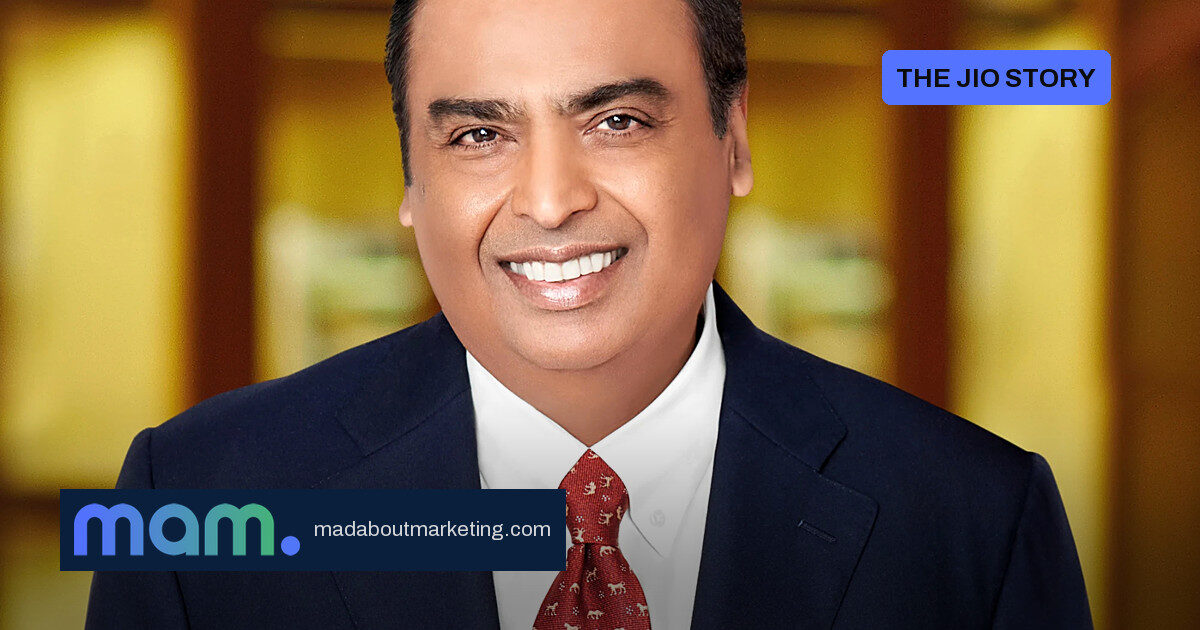
Every network has a launch story. Jio’s is well documented: in 2016 the Welcome Offer brought unlimited 4G data, voice, video and apps (Reliance Industries). The company reached 100 million subscribers within 170 days of launch (company-reported; Reliance Industries Integrated Annual Report 2016-17).
But the story that stuck isn’t about data. It’s about the village video call, the hostel Wi-Fi password, the regional creator’s festival reel. Jio serves 524 million+ customers today (Reliance Jio Infocomm, March 2026; company-reported). The marketing question is no longer how it scaled; it’s why it became local so fast.
01 · The first call was a village event
In small-town India, a video call home was once a planned occasion. You went to the cyber cafe, bought a data pack, and kept it short. After the Welcome Offer, the call moved to the courtyard, the kitchen, the wedding hall. Families began showing up on each other’s screens without watching the meter.
That shift reframed the brand. A network isn’t remembered for its pricing; it’s remembered for who it let you see. The village-to-city call became a ritual, repeated enough that it turned Jio into background infrastructure for emotional life.
02 · Hostel Wi-Fi culture made one connection many screens
In hostels and paying-guest rooms, one connection routinely hosted a corridor of devices. Students compared notes on live classes, streamed cricket, queued finales, and passed around a hotspot password like a common-room remote.
This is shared-screen behaviour, not individual data consumption. For marketers, it’s a reminder that bandwidth is often a group product. The customer isn’t always a single user; sometimes it’s a room.
03 · Regional creators and festival feeds filled the local layer
As data stopped being the daily arithmetic, regional voices moved in. Creators began working in dialect, posting festival recipes, local humour and neighbourhood references. Festivals became live feeds, not just family events. The feed started to look and sound like the viewer’s own place.
That’s the creative layer marketers often outsource to translation. Local voice isn’t a language deliverable; it’s the idea. The regional creator doesn’t adapt a national campaign. The creator is the campaign.
04 · What brand leaders can brief against
- Shared moments, not just demographics. A hostel corridor, a festival gathering or a family video call can be a distribution surface.
- Local language as the big idea. Dialects, rituals and regional references can carry the brand, not just accompany it.
- Network as utility, memory as brand. The connectivity fades into the background; the local moment is what people retain.
The series’ framing line captures the shift: the question India asked moved from ‘How much does data cost?’ to ‘What can we do with data?’ Marketers should ask the same about local culture—not how much reach it gives, but what people use it for when the meter disappears.
The Jio story, told through local voices, is a playbook for brands that want to be remembered as infrastructure for identity, not just utility. Market the moment, not the network.