Vitalife’s ‘Swaad Swaad Mein Sehat’ — Glassbox Takes On Ordering-In ‘Modern Chaos’
Vitalife (Gokul Agro) and Glassbox flip edible-oil advertising from product attributes to behaviour — ‘Swaad Swaad Mein Sehat’ takes on ordering-in ‘Modern Chaos’ with Hindi, Gujarati and Bengali films.
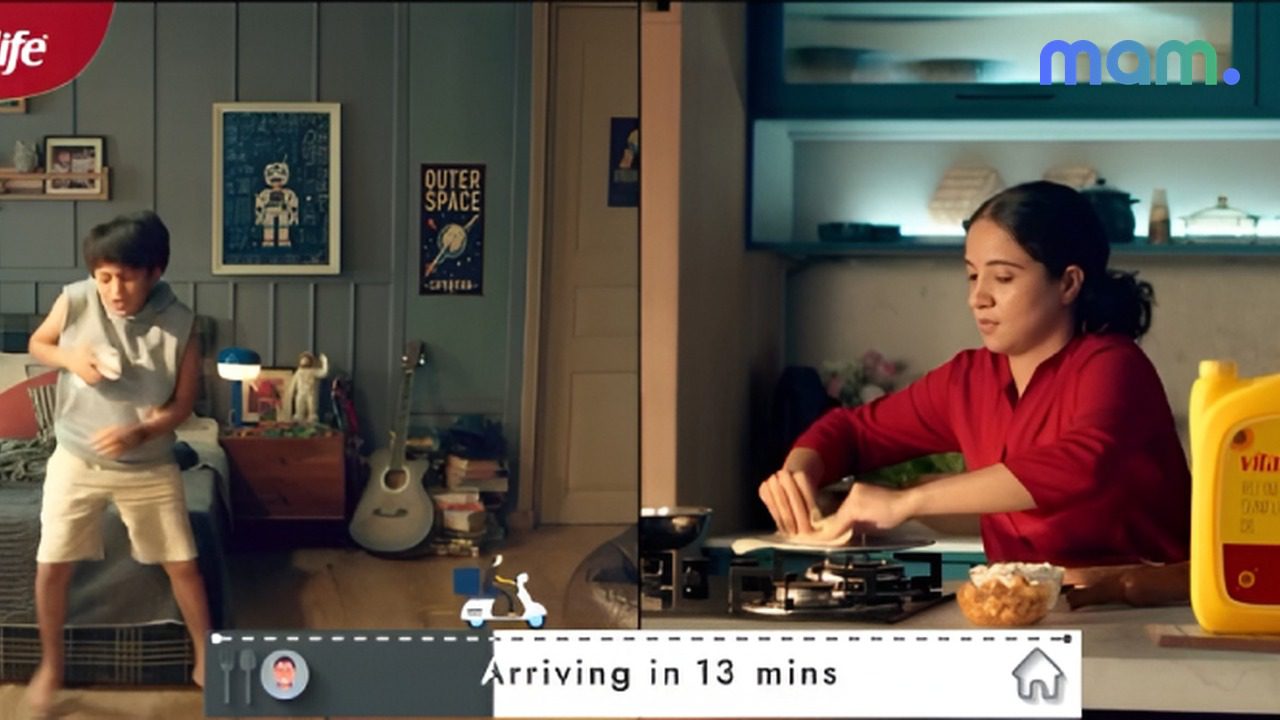
Mumbai, September 2026: Gokul Agro Resources Ltd. has rolled a national campaign for flagship edible oil brand Vitalife, built around busy lifestyles that push Indians toward eating out, ordering in and convenience meals. Conceptualised by Glassbox, the work names that pressure “Modern Chaos” and anchors on the line “Swaad Swaad Mein Sehat” — shifting the category conversation from rival oils’ attributes to everyday food behaviour.
Three regional films in Hindi, Gujarati and Bengali recreate popular takeout dishes as home-cooked meals, nudging families back into the kitchen. The creative sits inside a wider ecosystem: an annual Home-Cooked Food Index tracking how often Indian households still cook at home; a creator programme across Gujarat, Punjab, Bengal and Maharashtra; and media across Meta, YouTube, OTT and CTV.
The timing leans on hard dietary maths. NFHS-6 puts 30.7% of Indian women and 27.3% of men as overweight or obese — up from 24% and 22.9% in the prior round — while IMARC pegs India’s online food delivery market at about USD 67.9 billion, up from USD 55.6 billion.
Geetanjali Bhattacharji, Co-founder, Glassbox, said: “This is the first time the category has taken on a behaviour instead of a competitor. As convenience increasingly shapes the way we eat, Vitalife is bringing the focus back to home-cooked meals, putting swaad and sehat on the same plate.” Arun Harne, Chief Business Officer, Gokul Agro Resources Ltd., added: “We want to encourage families to choose home-cooked food more often. For us, if Vitalife can play a small part in bringing more wholesome, home-cooked meals to the table, we’ve done our job.”
Vitalife’s portfolio spans Refined Sunflower Oil, Kachi Ghani Mustard Oil and Refined Soyabean Oil, fortified with vitamins A, D and E, and sold across marketplaces and general trade. Anil Nair, Co-founder, Glassbox, framed the build as a system: “Creativity here is a system, not a campaign. The films, the index, the creators and the shelf are one engine, built so that the idea keeps working long after the launch noise has gone.”
Marketing take
Vitalife isn’t fighting another oil on smoke-points and purity claims — it’s fighting the scooter timer on the app. Glassbox’s behaviour-first pivot, regional kitchen films and a recurring Home-Cooked Food Index give the brand a cultural engine, not just a launch burst.