Laxmi Takes Diwali Storytelling to Times Square via Jio Creative Labs
Laxmi, the HOS Global Foods South Asian food brand, puts Diwali on Times Square screens with a campaign created end-to-end by Jio Creative Labs.
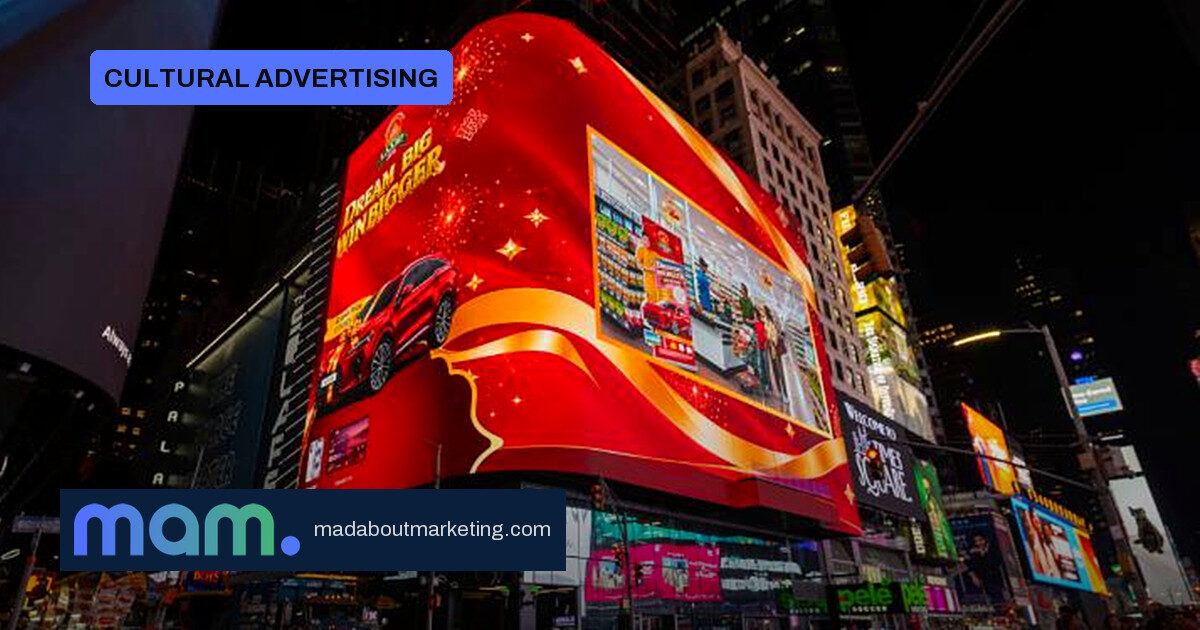
Laxmi, the South Asian food brand owned by HOS Global Foods, has taken its Diwali campaign to New York’s Times Square, using the digital billboards to carry Indian festive storytelling into one of the world’s most watched advertising spaces.
The work was conceptualised and produced entirely by Jio Creative Labs. It is built around the colours, rituals and celebratory mood of Diwali, translated into large-format outdoor creative for an international audience.
01 · Why an Indian festival belongs on a Manhattan screen
Laxmi’s campaign joins a short but significant line of South Asian brands at Times Square. Amul’s “Be More Milk” appeared on the Nasdaq MarketSite billboard in 2023, and Marico’s Parachute lit up the same district during the 2025 festive season. Laxmi extends the pattern: India’s festival calendar is becoming a legitimate global media moment.
For Laxmi, positioned as the USA’s No. 1 South Asian brand, the billboard is not simply a visibility play. It ties the brand’s food credentials to the emotional associations of Diwali — family, togetherness, nostalgia and celebration — and places that story where North American and international consumers will notice it.
Behind the screen is a broader marketing reality. The South Asian diaspora is large and affluent in the US, but festivals like Diwali also carry growing mainstream recognition. Brands that treat Diwali as a cultural export, not just a community event, can make a single out-of-home moment work twice: once for the diaspora that already owns the ritual, and once for the wider audience discovering it.
02 · The idea: connection, not just visibility
Moniil Vasa, Head of Partnerships and Brand Alliances at Jio Creative Labs, explains the creative logic. “At the heart of every effective brand campaign is a story that people can connect with,” he said. “The idea is not just to create visibility, but to create a connection that stays with people.”
The distinction matters for CMOs. Festivals can easily become a visual shortcut — diyas, marigolds and colour with no clear brand stake. Laxmi’s campaign is stronger because the celebration is inseparable from the category: food is how many people mark Diwali, and Laxmi is a food brand.
03 · What brand leaders can take from this
- Start with the brand’s cultural claim. Laxmi is not renting Diwali as decoration; it is reinforcing its South Asian food identity.
- Keep idea and production close. One team from concept to billboard preserves the cultural nuance.
- Use a global stage to stretch the audience. Times Square turns a community festival into a mainstream brand story.
The one-line marketing take: a festival is not a theme to rent, it is a memory to activate — and the brands that keep that memory specific are the ones that travel.