MediBuddy’s ‘Flush’ unlocks men’s mental health
MediBuddy’s International Men’s Day film uses a locked bathroom to challenge male emotional suppression and ends with a call to talk to a psychologist.
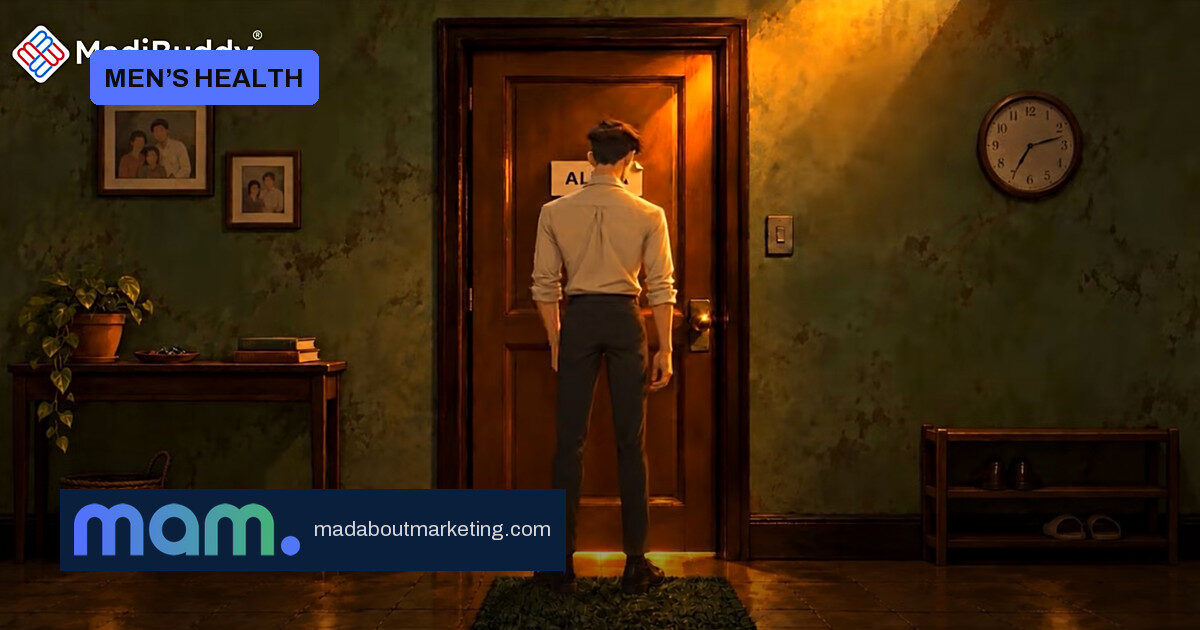
The campaign film is titled ‘Flush’ and runs about 40 seconds. MediBuddy released it for International Men’s Day, but the setting is deliberately small: a man alone in a locked bathroom.
01 · The moment the brand noticed
MediBuddy’s central observation is that for many men, the bathroom is one of the few places where they can sit with their thoughts away from expectation. November 19 matters here twice over: it is both International Men’s Day and World Toilet Day. The campaign turns that overlap into a creative hook.
As the film unfolds, a voiceover lists the roles men are expected to carry: the provider, the strong one, the person who never makes his struggles someone else’s problem. The man eventually peels an “ALPHA” sticker off the bathroom door. It is a small, visual gesture, but it carries the campaign’s bigger argument: rigid masculinity leaves little room for vulnerability.
02 · A metaphor that flushes both ways
The film draws a direct parallel between flushing and the emotions men are conditioned to push away. Boys are often told not to cry, not to ask for help, and to step out with a smile no matter what they are going through. In the campaign, #DontFlushIt becomes the inversion: don’t treat feelings as waste.
The closing line—“Men shouldn’t need a locked door to feel things”—turns the locked room from a setting into the problem. Secrecy should not be the cost of feeling.
Chandan Agarwal, VP – Consumer Business & Marketing at MediBuddy, puts the call plainly: “Taking the first step towards seeking help is, in itself, an act of strength.” For a healthcare brand, that framing matters. It positions mental health support as approachable and free from hesitation, not as a final resort.
03 · What brand leaders can borrow
- A familiar, ordinary space can make an emotional message feel specific rather than preachy.
- Piggybacking on a dual observance gives the campaign a built-in news moment.
- Awareness only becomes useful when it ends in one clear action—here, talk to a psychologist on MediBuddy.
Men’s mental health advertising often defaults to the same “it’s okay to talk” line. What makes this film different is that it shows isolation before it asks for change. The locked door is not a gimmick; it is the exact behaviour the brand wants men to leave behind.
MediBuddy’s call to action is deliberately practical. The film’s closing frame moves from symbol to service, reminding men they do not have to work through emotional struggles alone.
04 · The marketing take
The strongest purpose campaigns attach a familiar object to an uncomfortable truth, then convert that tension into a next step. MediBuddy’s flush does all three.