How Unilever creates 12x the content at 90% lower cost
Unilever is operationalizing AI discovery, machine-readable claims, and creator influence to turn demand generation into a repeatable growth engine.
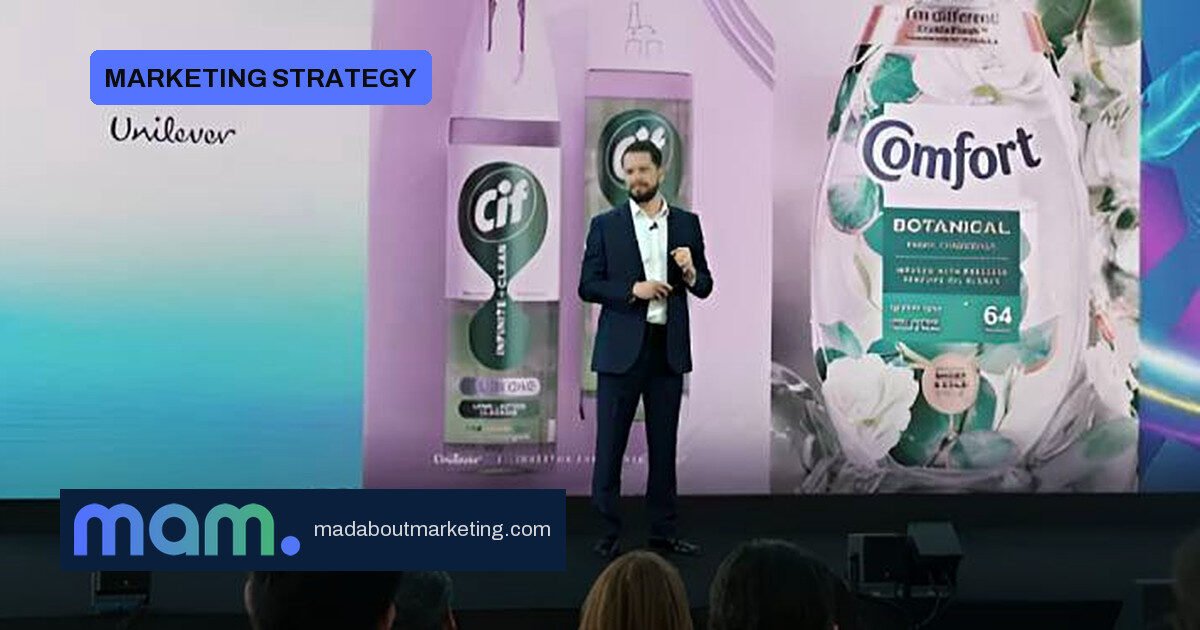
At an investor event in New York, Unilever CMO Leandro Barreto laid out how the FMCG giant is turning its “Desire at Scale” strategy into an operating model for demand generation.
The ambition is to make consumer demand creation more systematic and repeatable—combining advanced science, premium product design, and cultural relevance to strengthen brand preference as Unilever focuses on its Home and Personal Care business.
01 · Four capabilities, one operating model
Barreto framed the strategy around four connected capabilities:
- Recommendation at scale: winning in AI-assisted product discovery.
- Content at scale: producing platform-specific creative faster and cheaper.
- Influence at scale: scaling creator partnerships beyond a niche tactic.
- Media at scale: tying media investment to retail sales outcomes.
That integration matters because AI assistants and recommendation algorithms increasingly shape which products consumers notice first.
02 · AI discovery becomes a marketing target
Unilever is tracking more than one million prompts every week to understand how large language models recommend brands. In the last six months, 91% of its tracked brand-market positions improved in LLM rankings, and a Unilever brand appeared in the top three recommendations in eight of its ten key markets.
The company has structured 150,000 scientific documents to make product claims machine-readable, drawing on roughly 15,000 active patents. Dove is the most-mentioned brand in deodorants and skin cleansing in the US and India, while Rexona leads mentions in Brazil and Indonesia.
03 · Twelve times the content, 90% cheaper
Unilever’s AI-powered content engine is built around each brand’s identity, propositions and guidelines. The result: 12x more content than 2024 at 90% lower cost. A video that took three weeks now takes about three hours.
The takeaway for CMOs is not just speed—it is that scalable content only works when brand assets and guardrails are embedded before production starts.
04 · Creators out-convert brand content
Unilever has grown its creator base from 75,000 in 2024 to more than 500,000 today. Creator-generated content delivers roughly 1.5x the return of brand-produced content, Barreto said.
Dove’s partnership with Reddit to promote its Intensive Repair 10-in-1 Serum Hair Mask shows how the model works. Dove asked users to review the product and committed to publishing the first 50 reviews—positive or negative—unedited. The product went from the third bestselling hair mask in the US to number one.
05 · Media investment tied to sales
Unilever tracks media investment performance across more than 40 retailers and 20 markets, improving ROI by about 10% on average. It plans to expand to 65+ retailers and 30 markets, and expects more than €65 million in efficiencies this year from proprietary digital media buying optimisation.
Cultural relevance still anchors the system: Dove with Bridgerton, Clear with Red Bull Racing, Sunsilk with K-pop group Babymonster, and FIFA World Cup 2026 activations across 120 markets that generated around €350 million in limited-edition sales.
06 · Why it matters
Unilever is showing what an AI-native, creator-led demand engine looks like in FMCG. For Indian brand leaders, the signal is clear: recommendation visibility, creator communities, and retail-linked measurement are fast becoming the core of modern brand building—not add-ons.
It’s a shift from making ads to engineering demand: systematise claims, scale content with guardrails, and let credible voices carry the brand.